
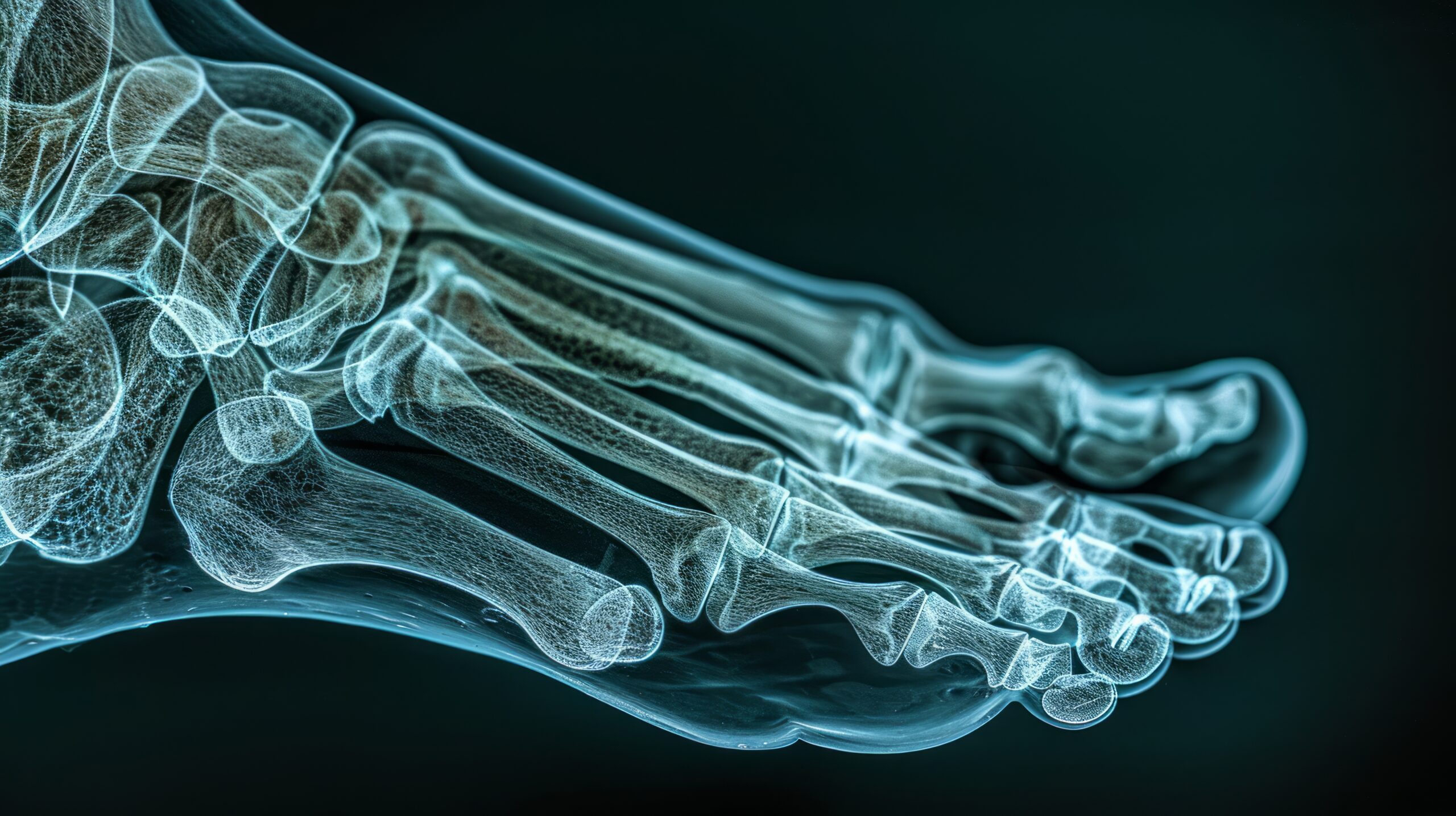
Your Spine Starts at Your Soles: 5 Surprising Truths About the Foundation of Your Body
Your Spine Starts at Your Soles: 5 Surprising Truths About the Foundation of Your Body
Your feet are the only part of your body designed to meet the ground thousands of times a day. With every step, they absorb impact, read the surface beneath you, and help your nervous system coordinate balance and movement. When that foundation is working well, the rest of your body can stack and move with far less strain. When it is not, the effects can travel upward through the ankles, knees, hips, pelvis, and spine.
For many people, back pain is not only a “back problem.” It is a load management and movement organization problem that often begins at the ground. In many cases, these problems start with an earlier strain or sprain–injuries that can compound and lead to larger problems later on. Think about the amount of force involved in such injuries, it’s essentially inevitable that your bones can be misaligned as a result! That’s why it is critical to get your extremities checked out following such injuries, and recommended as a preventative step before engaging in sports, hiking, and physical exertion. Your chiropractor can identify problematic misalignments, and correct them before they translate into larger, more painful conditions that can be more difficult to recover from.
Below are five surprising truths about the role your soles play in overall joint and body health, and what a chiropractor looks for when addressing the body from the bottom up.
Truth #1: Your feet are a sensory organ, not just a support structure
The skin, ligaments, and small joints of the foot contain a dense network of receptors that feed information to your brain about pressure, vibration, and position. That real-time input helps regulate:
- Balance and stability
- Muscle tone up the chain (calves, hamstrings, hips, core)
- Timing and coordination of gait
Why it matters for the spine: When the feet do not sense and adapt well, the body often compensates by stiffening elsewhere, commonly at the knees, hips, or lower back. Stiffness can become a strategy for stability.
What to notice: If you feel unsteady on uneven ground, rely heavily on shoes for stability, or feel “tight everywhere,” your feet may not be sharing the workload effectively.
Truth #2: Your arch is meant to move, not “hold” a perfect shape
People often talk about “flat feet” or “high arches” as if the arch should be a fixed structure. In reality, a healthy foot is both stable and adaptable.
Your arch behaves like a spring:
- It loads as your weight comes down.
- It stores elastic energy.
- It rebounds to help you move forward efficiently.
Why it matters for joint health: If the arch collapses too quickly (or does not load at all because the foot is rigid), forces can be redirected to the ankle, knee, hip, and low back. Your body still has to move. It will simply move somewhere else.
Practical takeaway: The goal is not to force a “perfect” arch. The goal is to improve the foot’s ability to load, adapt, and re-stiffen at the right time.
Truth #3: Foot pronation and supination influence how your knee and hip rotate
In walking, a small amount of pronation (the foot rolling inward and flattening) is normal. It helps the body absorb shock. As you progress through a step, the foot should gradually transition toward supination (becoming more rigid) to create a stable lever for push-off.
If that timing is off, it can change the way the shin and thigh rotate:
- A foot that stays “collapsed” can encourage the knee to drift inward and the hip to rotate inward.
- A foot that stays overly rigid can limit shock absorption and shift stress upward.
Why it matters for the spine: The pelvis and lumbar spine always respond to what is happening below. Repetitive rotation or asymmetrical loading from the legs can contribute to:
- SI joint irritation
- Hip pinching or tightness
- One-sided low back tension
A chiropractor evaluates these patterns because alignment is not static. It is dynamic and step-to-step.
Truth #4: The big toe is a “steering wheel” for gait, and it affects your low back
Your big toe (and the joint at its base) plays a major role in propulsion. During a normal step, you should be able to extend the big toe as you push off.
When big-toe mobility is limited, your body often finds a workaround:
- Turning the foot outward to avoid bending the toe
- Shifting weight to the outside of the foot
- Overusing the calves or hamstrings
Why it matters for the whole body: Those workarounds can subtly alter stride length, pelvic motion, and spinal mechanics. Over time, that can contribute to chronic tension patterns.
At-home self-check: Standing near a wall for balance, see if you can gently lift the big toe upward while keeping the ball of the foot on the ground. Compare sides. A clear difference can be a clue worth discussing in an exam.
Truth #5: Your shoes can either restore function or quietly reinforce dysfunction
Supportive footwear can be helpful, especially when pain is high. But shoes can also reduce the foot’s natural workload. If you always rely on stiff soles, heavy cushioning, or narrow toe boxes, the muscles of the foot and lower leg may do less over time.
Common shoe issues that affect the chain:
- Narrow toe box: limits toe splay, reducing stability and altering push-off
- Very rigid sole: reduces natural foot motion and sensory feedback
- Excessive heel lift: changes ankle mechanics and can increase calf tension
The goal is not “minimalist for everyone.” The goal is the right shoe for your body, your activities, and your current capacity, with a plan to build strength and mobility where needed.
What a chiropractor looks for: a bottom-up blueprint
A comprehensive chiropractic assessment often includes more than the spine. In a foot-to-spine approach, we may evaluate:
- Foot and ankle mobility (including big-toe extension)
- Balance and single-leg stability
- Walking mechanics and weight transfer
- Hip rotation and pelvic control
- How the spine responds to movement and load
Treatment may include a combination of:
- Spinal and extremity joint adjustments when appropriate
- Soft tissue work and mobility strategies
- Gait and movement coaching
- Simple strengthening drills for the feet, calves, hips, and core
- Recommendations for footwear or temporary support when indicated
Three simple ways to support your foundation (starting today)
1) Spend a few minutes barefoot on safe surfaces
- Practice shifting weight slowly from heel to forefoot.
- Think “tripod foot”: heel, base of big toe, base of little toe.
2) Train toe strength and control
- Try gentle toe spreads and big-toe lifts.
- Build endurance, not intensity.
3) Restore ankle motion
- A stiff ankle can force the foot or back to compensate.
- A simple calf stretch and knee-to-wall ankle mobility drill can help.
If any of these movements reproduce sharp pain, numbness, or tingling, stop and get evaluated.
When to get checked
Consider scheduling an exam if you have:
- Ongoing plantar heel pain, arch pain, or forefoot pain
- Recurrent ankle sprains or a feeling of instability
- Knee, hip, or back pain that flares with walking or standing
- A noticeable difference between your left and right side
Your spine does not operate in isolation. It is part of a whole-body system that begins at the ground. When your soles are supported, your posture and movement often become easier everywhere else.
Ready to address the problem from the ground up?
If you would like a personalized foot-to-spine assessment, contact our office to schedule a visit. We will look at how your feet, hips, and spine work together so you can move with less pain and more confidence.